

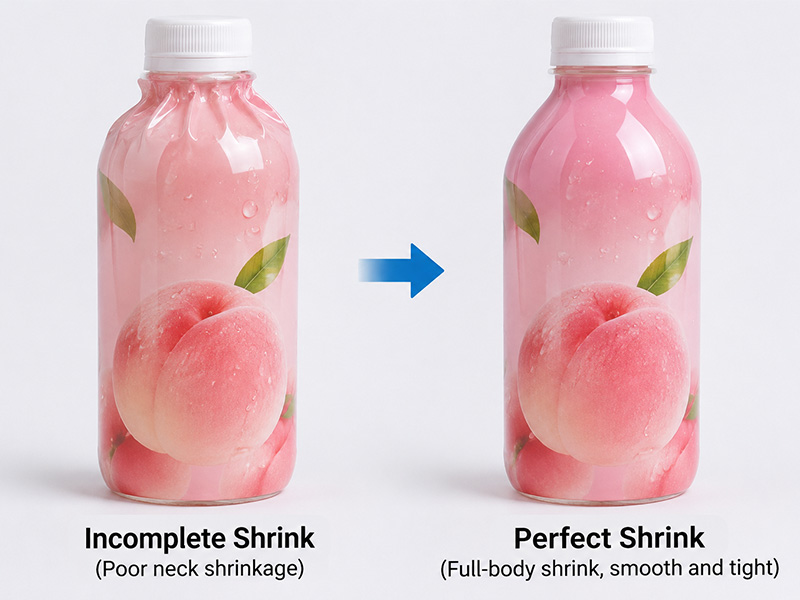
A shrink sleeve label may look perfectly smooth around the main body of a bottle but develop wrinkles, folds, or loose areas near the shoulder. This is a common problem when applying full-body shrink sleeves to shampoo bottles, cosmetic containers, detergent bottles, and other irregular-shaped packaging.
Why do shrink sleeves wrinkle around bottle shoulders? In most cases, the problem is related to uneven film contraction, excessive sleeve clearance, unsuitable film shrink characteristics, incorrect sleeve positioning, or insufficiently controlled heat distribution. The shoulder is particularly challenging because the bottle diameter changes between the main body and the neck, requiring the sleeve to follow a more complicated contour.
Simply increasing the tunnel temperature is not always the right solution. A better approach is to evaluate the bottle geometry, shrink sleeve material, application quality, steam distribution, and conveyor speed together.
At EPK Packingline, we provide bottle sleeve labeling, steam shrinking, and bottle drying equipment. Understanding the cause of shoulder wrinkles is an important first step in selecting the right steam shrink tunnel and bottle dryer solution.
Why Do Shrink Sleeve Labels Wrinkle Around Bottle Shoulders?
The shoulder is the transition area between the wider bottle body and the narrower neck. Unlike a straight cylindrical bottle, a contoured bottle has changing diameters and curved surfaces. When a heat-shrinkable sleeve is applied, the film must contract and conform to these different shapes during the shrinking process.
If the film does not receive sufficient or evenly distributed heat at the shoulder, it may not shrink enough to follow the bottle contour. If different sections of the sleeve contract at different rates, excess material can gather into visible folds or wrinkles.
Several factors influence the final shrink sleeve appearance:
- Bottle shoulder angle, curvature, and diameter transition.
- Sleeve circumference and film thickness.
- Film shrink percentage in machine and transverse directions.
- Steam distribution and nozzle positioning.
- Conveyor speed and exposure time inside the tunnel.
- Sleeve positioning and application quality.
For this reason, a shrink tunnel that produces a smooth finish on a straight PET bottle may not deliver the same result on an oval shampoo bottle or a container with a steep shoulder. The machine configuration and shrink parameters need to match the actual bottle profile.
Common Causes of Shrink Sleeve Wrinkles on Bottle Shoulders
Understanding where and how the wrinkles appear can help identify the underlying problem. The following are common causes encountered in bottle shrink sleeve labeling applications.
Uneven Shrinkage Around the Shoulder
The shoulder generally requires the sleeve to undergo a different degree of circumferential contraction from the main bottle body. If the film's shrink characteristics do not match the bottle contour, it may struggle to fit the curved transition smoothly.
This is particularly noticeable on bottles with a wide body, narrow neck, steep shoulder, or pronounced curves. The film may appear tight around the body while excess material remains around the shoulder.
What to check: Review the bottle profile and the film supplier's shrink curve or shrinkage data. Confirm that the selected film has sufficient transverse shrink capability for the required bottle contour. Do not assume that a film suitable for a straight container will automatically work on a complex bottle shape.
Incorrect Shrink Sleeve Dimensions
Sleeve sizing is another important factor. If the sleeve circumference is too large for the bottle, more material needs to contract before the film can fit closely against the surface. This can increase the possibility of gathering or wrinkling around curved sections.
If the sleeve is too tight, however, it may become difficult to apply consistently. Excessive tension, poor positioning, or deformation during application can also affect the final appearance.
What to check: Measure the bottle circumference at the body, shoulder, and neck. Compare these measurements with the sleeve dimensions and the film's actual shrink performance. Also check whether the sleeve is correctly positioned before entering the shrink tunnel.
Unsuitable Shrink Film or Film Thickness
Different shrink sleeve materials have different shrink characteristics, temperature requirements, and processing windows. PETG, PVC, and OPS are commonly used shrink sleeve materials, but their suitability depends on the bottle design, label artwork, required shrink ratio, and tunnel configuration.
Film thickness also affects how the material responds during shrinking. A thicker film may require different heating conditions from a thinner film. However, thickness alone does not determine whether a sleeve will shrink smoothly. The film's shrink curve, directional shrink behavior, and compatibility with the bottle shape are more important considerations.
What to check: Ask the film supplier for shrinkage test data and recommended processing conditions. Evaluate the film using the actual bottle rather than relying only on its nominal material specification.
Incorrect Sleeve Position Before Shrinking
A sleeve that enters the tunnel at an angle or with uneven positioning may develop wrinkles even when the heating conditions are appropriate. If the sleeve is not level, one side of the shoulder may receive a different amount of material or experience a different shrink path from the other side.
What to check: Inspect the sleeve immediately after application and before shrinking. Look for tilted labels, uneven sleeve height, folds, and inconsistent cutting or application. If the problem is already visible before the bottle enters the tunnel, correct the labeling or feeding process first.
How Steam Distribution Affects Shrink Sleeve Quality
Heat distribution is one of the most important factors in achieving a smooth shrink sleeve finish. Even when the correct film and sleeve dimensions have been selected, uneven heating can cause incomplete shrinkage, localized wrinkles, or excessive contraction in certain areas.
A steam shrink tunnel uses controlled steam delivery to heat the sleeve around the bottle. A properly configured steam system can distribute heat around different sections of the container and provide suitable heating conditions for different bottle profiles.
This is particularly useful when processing bottles with curved shoulders, narrow necks, oval profiles, or other irregular shapes. The steam delivery system should be configured to provide appropriate heat exposure to the areas where the film needs to contract.
For example, EPK's EPS-1A semi-automatic steam shrink tunnel features an adjustable steam distribution system. Its listed configuration includes 10 steam pipes with 700 spray nozzles, with individual pipe adjustment in horizontal and vertical directions. This allows the steam delivery to be adapted to different container shapes and shrinking requirements.
The important point is that steam should reach the shoulder area effectively without unnecessarily overheating the bottle body or neck. Operators should evaluate nozzle positioning, steam pressure, steam flow, bottle orientation, and the actual film response during production.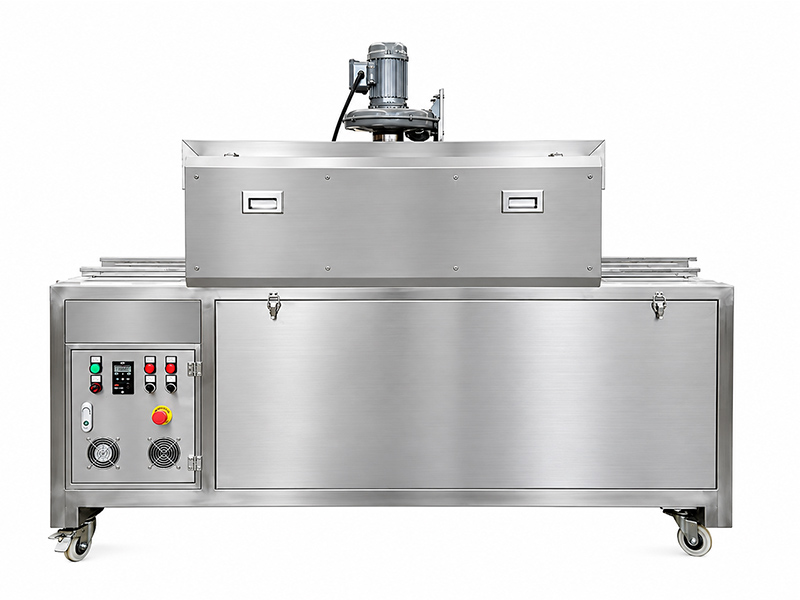
For customers processing contoured bottles, EPK offers semi-automatic steam shrink tunnels with built-in generators. The equipment can be evaluated for flexible bottle applications and different steam distribution requirements.
Why Increasing Shrink Tunnel Temperature May Not Solve Wrinkles
When operators notice wrinkles around the bottle shoulder, increasing the tunnel temperature is often the first adjustment they consider. However, this does not always solve the problem.
If the main issue is uneven steam distribution, excessive sleeve clearance, or unsuitable film shrink characteristics, higher heat may not correct the underlying cause. It may instead create other defects, such as excessive shrinkage, distorted artwork, film damage, or bottle deformation.
PET bottles and other heat-sensitive containers require particular attention. The heating process must be suitable for both the shrink film and the container material. A successful shrink result should not come at the expense of bottle shape or structural stability.
A more effective troubleshooting sequence is:
- Confirm that the sleeve is correctly sized and positioned.
- Check the film material and its shrinkage characteristics.
- Inspect steam nozzle positioning and heat distribution.
- Evaluate steam pressure, temperature, and exposure time.
- Adjust conveyor speed according to the actual shrinking result.
- Check for bottle deformation, film distortion, and wrinkles after each adjustment.
The best operating conditions are those that produce consistent sleeve quality at the required production speed, not simply the highest temperature setting.
How Conveyor Speed and Shrink Time Affect the Final Result
Conveyor speed determines how long each bottle remains inside the shrink tunnel. This exposure time directly influences how the film responds to heat.
If the conveyor moves too quickly, the sleeve may not receive sufficient heat to complete the shrinking process, especially around the bottle shoulder. If the conveyor moves too slowly, the film and bottle may receive excessive heat, potentially resulting in distortion or other appearance defects.
Tunnel length, conveyor speed, steam delivery, and film specifications must therefore be evaluated together. A setting that works during a slow trial may not produce the same finish at normal production speed.
For more reliable troubleshooting, use a controlled testing procedure:
- Use the same bottle, sleeve material, and sleeve dimensions throughout the test.
- Record the current steam and conveyor settings.
- Change one operating parameter at a time.
- Inspect the shoulder, main body, neck, and base after shrinking.
- Record the production speed and appearance of each test result.
- Repeat the test at the intended production rate to confirm consistency.
This approach helps identify whether the problem is related to insufficient heating time, uneven steam exposure, or compatibility between the film and bottle design.
How to Choose a Steam Shrink Tunnel for Contoured Bottles
For manufacturers producing shampoo, lotion, detergent, beverage, and other bottled products, selecting a suitable steam shrink tunnel is an important part of achieving consistent sleeve quality.
Rather than selecting equipment based only on its advertised production speed, consider the following technical requirements.
Steam Distribution and Adjustment
Look for a steam system that can distribute heat around the container and provide suitable adjustment for different bottle profiles. Adjustable steam pipes and nozzles can help operators direct steam toward areas that require more attention, including curved shoulders and narrow neck transitions.
Bottle Size and Shape Compatibility
Check the acceptable bottle diameter, height, orientation, and shape range. If your factory produces multiple bottle designs, consider whether the machine can accommodate different containers through adjustment rather than requiring extensive mechanical changes.
Production Capacity and Conveyor Configuration
The required bottles per minute should be considered together with bottle dimensions, film material, tunnel length, and shrinking requirements. Actual production capacity should be confirmed using your product and sleeve samples.
Bottle Drying After Steam Shrinking
Steam shrinking leaves moisture on the bottle surface. A suitable bottle dryer installed after the tunnel can remove residual water before downstream processes such as inspection, coding, cartoning, or case packing.
For this reason, an integrated steam shrinking and drying system can be a practical option for manufacturers who want to improve the continuity of their bottle packaging process.
EPK Steam Shrink Tunnel and Bottle Dryer Solutions
EPK Packingline supplies packaging machinery for bottle labeling, heat shrinking, drying, and integrated packaging line applications. Our equipment selection covers different production requirements, from individual steam shrink tunnels to automatic sleeve labeling systems with integrated shrinking and drying functions.
For customers experiencing shrink sleeve wrinkles around bottle shoulders, the appropriate solution depends on the bottle profile, sleeve material, required production speed, and existing packaging equipment.
Semi-Automatic Steam Shrink Tunnel and Dryer Machine
This configuration combines a steam shrink tunnel and bottle dryer. It is suitable for manufacturers who already have sleeve application equipment and need a dedicated system for shrinking and removing residual moisture.
The EPK EPS-2A+2000 model is listed with an acceptable container diameter below 140 mm and a stated packing speed of 40–120 bottles per minute, depending on product length, film material, and other operating conditions. These are model-specific specifications and should be verified against the actual application.
Learn more about the EPK Semi-Automatic Steam Shrink Tunnel and Dryer Machine.
Automatic Sleeve Labeling Machine with Steam Shrink Tunnel and Bottle Dryer
For factories planning a more integrated production process, an automatic sleeve labeling system with a steam shrink tunnel and bottle dryer can combine three important operations into one connected solution.
The system applies the sleeve label, transfers the bottle through the steam shrinking process, and removes surface moisture after shrinking. This arrangement can help reduce manual handling between processes and provide a more continuous bottle packaging workflow.
Explore EPK's Automatic Sleeve Labeling Machine with Steam Shrink Tunnel and Bottle Dryer for integrated bottle packaging applications.
Complete Bottle Packaging Line Integration
If your production requirements include filling, capping, sleeve labeling, shrinking, and drying, EPK can also help configure a connected bottle packaging line. The equipment arrangement can be planned according to bottle dimensions, filling requirements, target output, factory layout, and downstream packaging needs.
View the EPK Complete Bottle Packaging Solution to understand how different machines can be integrated into one production process.
A typical bottle packaging workflow may include:
Bottle Filling → Cap Feeding and Capping → Sleeve Labeling → Steam Shrinking → Bottle Drying → Downstream Packaging
The exact configuration can be adjusted according to the product, bottle material, sleeve requirements, production capacity, and available factory space.
How to Troubleshoot Shrink Sleeve Wrinkles Before Buying New Equipment
Not every shrink sleeve wrinkle requires replacing the existing machine. In many cases, a systematic inspection can help identify the source of the problem before making an equipment investment.
Use the following troubleshooting guide as an initial reference:
| Observed Problem | Possible Cause | What to Check |
|---|---|---|
| Wrinkles around the shoulder | Uneven contraction or insufficient local heating | Steam distribution, film shrink data, bottle contour |
| Loose sleeve around the body | Excessive sleeve clearance or insufficient shrinkage | Sleeve dimensions, film specifications, heating conditions |
| Wrinkles on one side only | Uneven positioning or heating | Bottle orientation, sleeve alignment, nozzle position |
| Film distortion or damaged artwork | Excessive heat or unsuitable shrink conditions | Steam settings, exposure time, film temperature tolerance |
| Bottle deformation | Excessive thermal exposure | Bottle material, wall thickness, heat distribution |
| Inconsistent results at higher speed | Insufficient heating time or unstable process conditions | Conveyor speed, steam supply, tunnel configuration |
This table provides general troubleshooting guidance. The actual cause should be confirmed through production trials using the same bottle, sleeve, and operating conditions.
Frequently Asked Questions About Shrink Sleeve Wrinkles
Why do shrink sleeves wrinkle around the shoulders of bottles?
Shrink sleeves wrinkle around bottle shoulders when the film cannot contract evenly to follow the transition between the wider body and narrower neck. Common causes include unsuitable film shrink characteristics, excessive sleeve clearance, uneven steam distribution, incorrect sleeve positioning, and insufficient heating time.
How can I prevent wrinkles on shampoo bottle shrink sleeves?
Check the sleeve dimensions, film shrink properties, and shoulder geometry before adjusting the tunnel. Ensure that the sleeve is applied level and that steam reaches the shoulder evenly. Then optimize conveyor speed and steam settings through controlled production tests.
Can a steam shrink tunnel reduce shrink sleeve wrinkles?
A properly configured steam shrink tunnel can help improve heat distribution around contoured bottles. Adjustable steam pipes and nozzles allow the heating process to be adapted to different bottle shapes. The correct film, sleeve dimensions, and operating parameters are also necessary.
Which shrink sleeve materials are suitable for contoured bottles?
PETG, PVC, and OPS are commonly used shrink sleeve materials. The best choice depends on the required shrink ratio, bottle geometry, label design, processing temperature, and application requirements. Always check the film supplier's shrinkage data and conduct a compatibility test.
Does increasing steam temperature always eliminate sleeve wrinkles?
No. Higher temperature may not solve problems caused by incorrect sleeve dimensions, unsuitable film, or uneven steam delivery. Excessive heat can damage the film, distort printed artwork, or deform heat-sensitive bottles.
What is the difference between a steam shrink tunnel and a hot air shrink tunnel?
A steam shrink tunnel uses steam to heat shrink sleeve film, while a hot air shrink tunnel uses heated air. Steam systems can provide controllable heat distribution around contoured containers. The appropriate choice depends on film specifications, bottle material, production requirements, and equipment configuration.
Why is a bottle dryer needed after steam shrinking?
Steam shrinking leaves residual water on the bottle surface. A bottle dryer removes this moisture before downstream operations such as inspection, coding, labeling, or cartoning.
Can one steam shrink tunnel handle different bottle shapes?
Some steam shrink tunnels are designed to handle different bottle shapes and sizes through adjustable steam distribution and operating parameters. The acceptable diameter, height, and production capacity vary by model. Actual bottle samples and dimensions should be provided for equipment evaluation.
What information should I provide when requesting a steam shrink tunnel quotation?
Provide bottle photos, diameter, height, shoulder dimensions, bottle material, sleeve film type and thickness, target production speed, and required label coverage. If you already have a shrink tunnel, include its type, operating settings, and close-up photos of the wrinkles.
Get a Suitable Shrink Sleeve Packaging Solution from EPK
A smooth shrink sleeve finish around the bottle shoulder depends on more than temperature. Bottle geometry, film shrink characteristics, sleeve dimensions, steam distribution, and conveyor speed all influence the final result.
If your shampoo, cosmetic, detergent, or beverage bottles still develop wrinkles after shrinking, it is worth evaluating the complete application before changing equipment settings or investing in a new machine.
EPK Packingline provides steam shrink tunnels, bottle dryers, automatic sleeve labeling machines, and customized bottle packaging line solutions. Our equipment selection can be evaluated according to your bottle dimensions, packaging material, production capacity, and factory requirements.
To help us evaluate your application, please send:
- Photos and dimensions of your bottle, including the shoulder and neck.
- Bottle material and product application.
- Shrink sleeve material, thickness, and dimensions.
- Required production capacity in bottles per minute.
- Close-up photos showing the actual wrinkles after shrinking.
- Existing shrink tunnel type, conveyor speed, and operating settings, if available.
Based on these details, EPK can review your packaging requirements and recommend a suitable machine configuration. Bottle and sleeve samples can also be evaluated to help confirm equipment compatibility before final selection.
Looking for a more consistent shrink sleeve finish on your bottles? Contact EPK Packingline to discuss your application and explore a suitable steam shrink tunnel, bottle dryer, or complete automatic sleeve labeling solution.